

Group website:
Other websites:
Choose website









Strengthening Correctional Facility Security with High-Resolution X-Ray Screening



20 May 2026
Strengthening Correctional Facility Security with High-Resolution X-Ray Screening
Secure correctional environments require reliable screening of people, parcels and personal items without unnecessary disruption. Advanced X-ray security solutions help facilities detect concealed contraband, strengthen entry control and support safer daily operations.
Facility X-ray security helps correctional institutions improve entry control by screening people, parcels and personal items for concealed threats and contraband. In secure environments, even a small prohibited item can create a serious operational risk. Drugs, communication devices, improvised weapons, concealed tools and modified everyday objects can affect safety, discipline and the ability of staff to maintain control. Correctional facility security must therefore go beyond visible supervision and access control. A person may be authorized to enter a secure area, but the items carried on the body, inside the body, in a parcel or in a personal bag still require inspection. This is where modern X-ray security solutions for correctional facilities provide an important advantage. They allow security teams to examine people and items with greater clarity while reducing reliance on intrusive manual searches. For correctional institutions in the UAE and wider region, the priority is to maintain a secure, orderly and professionally managed environment. X-ray screening supports this objective by improving detection at the points where contraband is most likely to enter: intake, visitation, staff access, parcel handling, property rooms and service entrances.
A More Complete Approach to Secure Entry
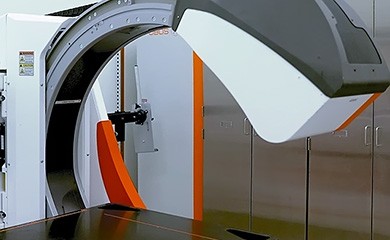
Traditional security measures remain important, but they are not always enough for modern correctional risks. Metal detectors can identify many metallic items, but they may not detect synthetic drugs, low-density materials, plastic components or internally concealed objects. Manual searches can help, but they are time-consuming, sensitive to staff availability and may create unnecessary friction when used as the main screening method. Modern contraband can be small, non-metallic and difficult to identify by touch or visual inspection. It may be hidden in clothing, body cavities, personal belongings, mail, parcels or modified everyday items. This requires a screening approach that can reveal shape, density and material differences before an item reaches a secure area. A layered X-ray screening model can include:- Low-dose full-body transmission X-ray scanners for detecting items hidden under clothing or within body cavities.
- Small-parcel and baggage scanners with dual-energy imaging for inspecting bags, packages, documents, property and deliveries.
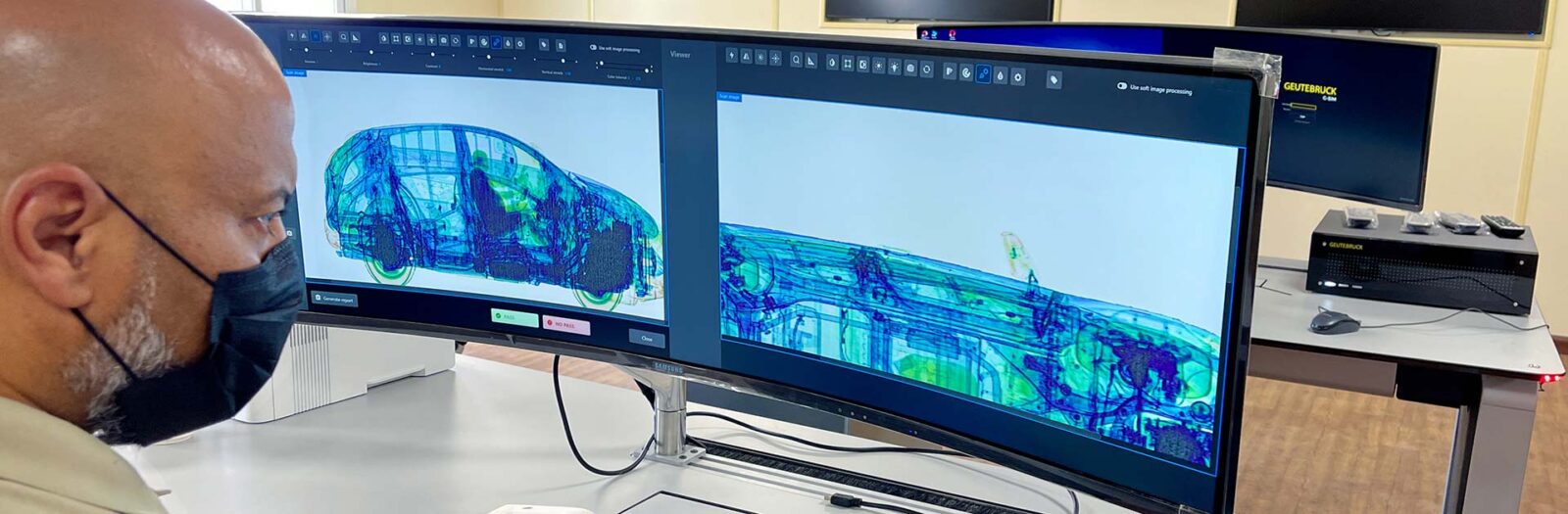
- AI-assisted detection software that highlights potential threats and supports more consistent operator review.
Reducing the Risk of Internal and External Concealment
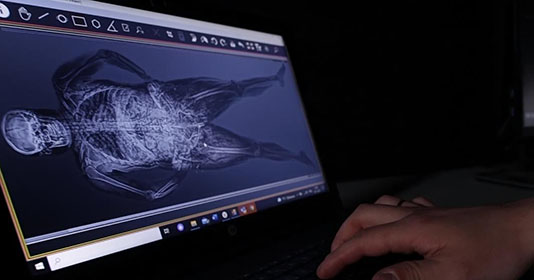
In correctional environments, contraband may be concealed in ways that are difficult to detect through routine search procedures. Items can be hidden under clothing, taped to the body, swallowed, or inserted into body cavities. Small electronics, narcotics, blades, tools and other prohibited items may be carried through secure points if inspection methods are not sufficiently advanced. Low-dose full-body X-ray screening helps address this challenge by giving security personnel visual evidence of concealed objects. The process is fast and non-contact, which can reduce the need for more intrusive search methods while still supporting a high level of control. This is important for both safety and professionalism. Correctional staff need reliable detection tools, but screening must also be managed in a way that is clear, consistent and proportionate. X-ray technology supports that balance by helping officers make decisions based on image evidence rather than suspicion alone.Improving Parcel, Mail and Property Inspection
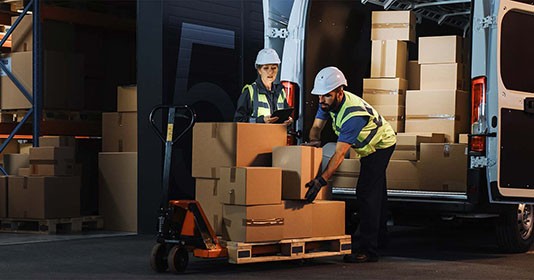
People are not the only route for contraband. Parcels, documents, clothing, books, food items, personal property and service deliveries can all be used to conceal prohibited materials. In secure institutions, these items must be inspected carefully before they are allowed into controlled areas. Small-parcel and baggage X-ray scanners support this task by allowing staff to examine internal contents without opening every item manually. Dual-energy imaging helps distinguish organic and inorganic materials, which can be useful when identifying drugs, electronics, weapons, dense objects or suspicious modifications hidden inside ordinary-looking items. This creates a more efficient screening workflow. Staff can process items more consistently, focus attention on suspicious scans and reduce unnecessary manual handling. For facilities with regular deliveries, visitation property or document movement, this can improve both security and operational discipline.AI-Assisted Screening for Consistency
One of the main advantages of modern X-ray security solutions for correctional facilities is the ability to support operators with AI-assisted detection. Image review requires concentration, and screening teams may need to process many scans during busy periods. Fatigue, shift patterns and workload can affect consistency when review depends only on manual attention. AI-assisted software helps by identifying areas of interest in scanned images. It can highlight potential weapons, restricted items and abnormal objects so that the operator can focus on the parts of the image that require closer review. The system supports the operator, but it does not replace human judgment or responsibility. For correctional institutions, this improves the reliability of daily screening. Whether the facility is processing visitors, new arrivals, staff movement, deliveries or property, AI-assisted review helps maintain a more consistent level of attention across different shifts and traffic volumes.Operational Benefits for Secure Facilities
Effective X-ray screening can improve more than detection rates. It can reduce the number of contraband incidents that lead to lockdowns, investigations, medical emergencies or staff intervention. It can also create a deterrent effect when people know that concealed items are more likely to be discovered before entering the secure environment. For facility managers and security leaders, this supports a more stable operating environment. Fewer prohibited items inside the institution means fewer disruptions, lower risk to staff and residents, and stronger control over daily routines. It also allows officers to spend less time on reactive searches and more time on supervision, movement control and facility management. The return on investment is therefore connected to risk reduction. Preventing one serious incident involving narcotics, weapons or unauthorized communication can avoid significant operational, legal and reputational consequences.Creating a Safer Correctional Environment
Correctional security depends on controlling every route through which contraband can enter. A strong perimeter is not limited to walls, gates and access cards. It also includes the inspection of people, property, mail, parcels and service deliveries before they move into secure areas. X-ray security solutions for correctional facilities help strengthen this perimeter by providing visibility where traditional methods may be limited. Full-body scanners help identify internal and external concealment. Parcel and baggage scanners support inspection of mail, property and deliveries. AI-assisted software helps operators maintain consistency and focus on suspicious areas. For UAE correctional institutions and other secure facilities, this technology supports a modern security model based on clarity, control and operational efficiency. It helps staff detect what cannot be seen from the outside and reduces the chance that small, concealed items can compromise the safety of the entire institution.
Manage Consent
Functional Always active
The technical storage or access is strictly necessary for the legitimate purpose of enabling the use of a specific service explicitly requested by the subscriber or user, or for the sole purpose of carrying out the transmission of a communication over an electronic communications network.
Preferences
The technical storage or access is necessary for the legitimate purpose of storing preferences that are not requested by the subscriber or user.
Statistics
The technical storage or access that is used exclusively for statistical purposes. The technical storage or access that is used exclusively for anonymous statistical purposes. Without a subpoena, voluntary compliance on the part of your Internet Service Provider, or additional records from a third party, information stored or retrieved for this purpose alone cannot usually be used to identify you.
Marketing
The technical storage or access is required to create user profiles to send advertising, or to track the user on a website or across several websites for similar marketing purposes.