

Group website:
Other websites:
Choose website









Closing Security Gaps Across University Campuses with Smart X-Ray Screening



11 May 2026
Closing Security Gaps Across University Campuses with Smart X-Ray Screening
Modern university campuses in the UAE require security that protects students, staff, visitors and service operations without slowing daily movement. X-ray security solutions for universities help strengthen secondary entrances, loading areas and staff access points with efficient screening supported by AI-assisted detection.
X-ray security solutions for universities help UAE campuses strengthen protection at staff entrances, service areas, loading docks and secondary access points while maintaining smooth daily movement. As universities across the region continue to expand, their campuses are becoming more complex. Academic buildings, student residences, laboratories, sports facilities, event spaces and service zones all create different access needs. Security can no longer focus only on the main entrance. In many campus environments, the front lobby receives the most visible investment. Visitor registration, student access cards, reception security and entrance screening are often well established. Behind the scenes, however, daily campus operations depend on service doors, staff corridors, maintenance routes and delivery points. These areas may be less visible, but they are essential to how the university functions. This is why X-ray security solutions for universities are becoming more relevant for facilities managers, security directors and campus operations teams. They provide a way to screen bags, parcels, equipment, tools and personnel at the entrances that are often used by employees, suppliers, contractors and service providers.
Secondary Entrances as Part of the Campus Security Plan
A modern university campus in the UAE may operate more like a small city than a single education building. It may receive students, faculty, visiting lecturers, parents, vendors, maintenance teams, catering suppliers, cleaning crews and event contractors throughout the day. Each group may use different access points depending on its role. The challenge is that these access points are not always protected to the same standard. Main entrances may have clear visitor procedures, while service entrances rely mainly on access cards, routine familiarity or operational convenience. This can create a gap between the level of protection expected by university leadership and the reality of daily campus access. Staff and service entrances can be vulnerable because they combine several risk factors:- They are used regularly and their routines can become predictable.
- They may receive deliveries, tools, equipment cases and parcels throughout the day.
- They are often used by external contractors and suppliers whose presence changes depending on the schedule.
- They may not have the same level of screening as student or visitor entrances.
Why Campus Growth Increases Access Complexity
The expansion of higher education in the UAE has created campuses with larger footprints, more buildings and more diverse daily activity. Universities are also hosting more conferences, public events, research partnerships and international programs. This increases the number of people and service providers entering the campus environment. At the same time, many institutions are designed to remain open, welcoming and efficient. Students and staff need to move easily. Visitors should not feel that the campus is hostile or difficult to enter. Service operations must continue without delays. This creates a security challenge that cannot be solved by simply adding more guards to every door. X-ray security solutions for universities help address this challenge by making screening more targeted and more efficient. Instead of applying the same process everywhere, facilities managers can identify higher-risk access points and add screening where bags, parcels, toolkits, cases and other carried items enter the campus. This approach supports a more professional and proportionate security model. It improves protection without creating unnecessary inconvenience for the entire campus population.Screening Bags, Parcels and Equipment at Service Areas
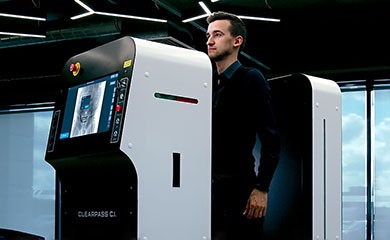
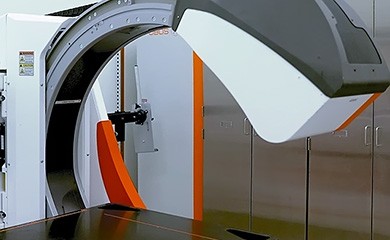
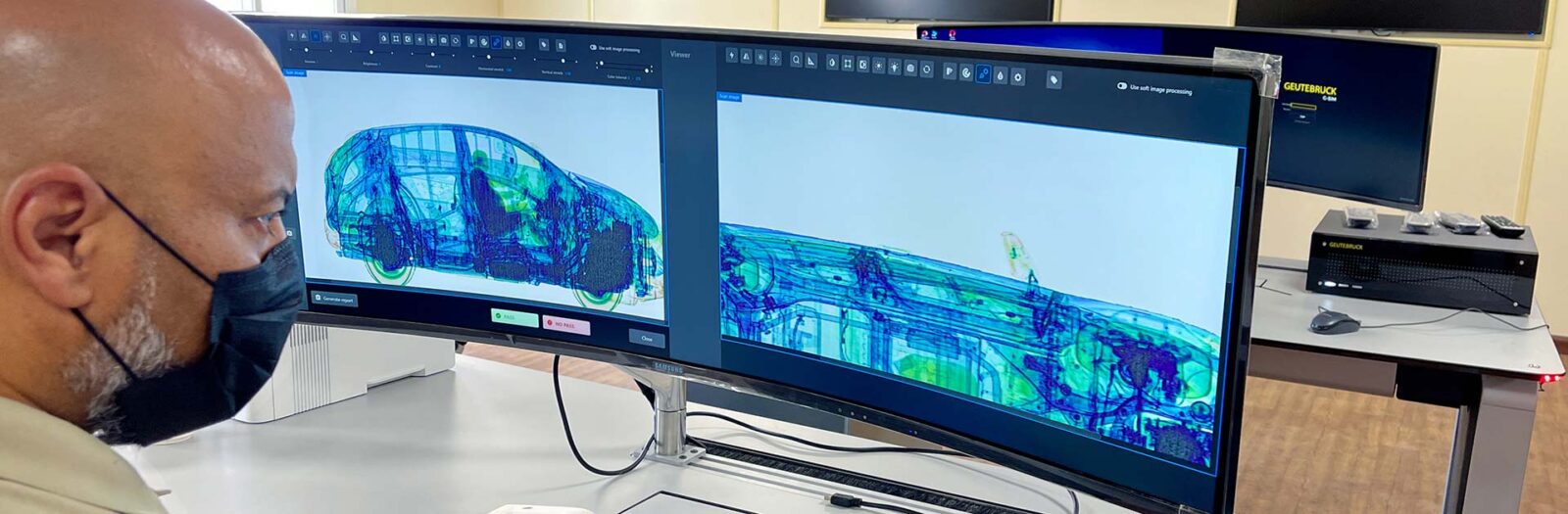
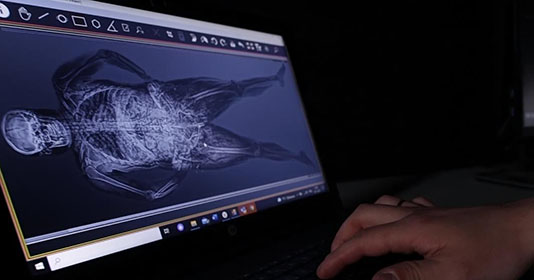
Service entrances and loading docks are often the most practical places to begin. These areas already handle deliveries, supplies, maintenance equipment and contractor movement. Adding compact X-ray screening equipment to these locations allows security teams to inspect items before they move deeper into the campus. Modern baggage and parcel screening systems are designed to work in real operational spaces, including service corridors, reception areas and loading zones. They can inspect backpacks, delivery boxes, toolkits and equipment cases without requiring major structural changes. For universities, this is important because many existing buildings were not originally designed around advanced screening technology. Low-dose full body scanners can also be used where personnel screening is required. They provide a fast and dignified method for identifying prohibited items concealed under clothing or within body cavities. This helps reduce reliance on intrusive manual searches while preserving a more respectful experience for staff, contractors and other authorized users. A phased deployment can make implementation easier for UAE universities. The process may begin with the most active loading docks, then expand to contractor entrances and selected staff access points. Over time, screening data can be aligned with existing access control systems to create a clearer view of how people and items move through the campus.AI-Assisted Screening for Consistent Campus Protection
One of the most important changes in campus screening technology is the use of AI-assisted detection. In the past, wider deployment of X-ray screening required a larger number of highly experienced image operators. That made it harder to extend screening beyond the main entrance or a small number of high-risk locations. AI-powered detection improves the workflow by helping identify weapons, restricted items and suspicious objects in scanned images. The system can highlight areas that require attention, allowing the operator to focus on review and response rather than manually studying every routine image with the same intensity. This is valuable for universities because access activity changes throughout the day. Contractor arrivals, deliveries, maintenance work, student events and academic schedules can all create changing traffic patterns. AI-assisted screening helps maintain a more consistent level of attention even when the volume of scans increases. The operator remains part of the decision-making process. AI does not remove human responsibility. It supports security staff by reducing routine workload, improving consistency and helping them respond more effectively to scans that show potential concern.Creating a Balanced Security Environment
For UAE universities, the goal is not to make the campus feel closed or difficult to access. The goal is to protect the areas where risk can enter quietly. Staff entrances, delivery points, contractor routes and service doors should not remain outside the security plan simply because they are less visible than the main lobby. X-ray security solutions for universities make it possible to close these gaps in a measured and operationally realistic way. They allow campuses to screen items and people at selected access points while maintaining the movement, dignity and openness expected in an education environment. As university campuses become larger, more international and more operationally complex, security planning must evolve with them. A strong front entrance is no longer enough. A safer campus requires visibility across the full access perimeter, including the service areas and staff routes that keep the institution running every day. By combining compact parcel screening, low-dose personnel screening and AI-assisted detection, universities can build a more complete protection strategy. This helps ensure that security is not concentrated only where it is easiest to see, but applied where it is actually needed.
Manage Consent
Functional Always active
The technical storage or access is strictly necessary for the legitimate purpose of enabling the use of a specific service explicitly requested by the subscriber or user, or for the sole purpose of carrying out the transmission of a communication over an electronic communications network.
Preferences
The technical storage or access is necessary for the legitimate purpose of storing preferences that are not requested by the subscriber or user.
Statistics
The technical storage or access that is used exclusively for statistical purposes. The technical storage or access that is used exclusively for anonymous statistical purposes. Without a subpoena, voluntary compliance on the part of your Internet Service Provider, or additional records from a third party, information stored or retrieved for this purpose alone cannot usually be used to identify you.
Marketing
The technical storage or access is required to create user profiles to send advertising, or to track the user on a website or across several websites for similar marketing purposes.